Picture a radiologist in 2019, hunched over a stack of 400 chest X-rays before lunch. Now picture the same department in 2026: the software flags six of those scans as suspicious before she's even poured her coffee. Not because the machine is smarter than her. Because it never gets tired of looking.
That gap—between what artificial intelligence can do and what a tired human can do at 4:47 p.m. on a Thursday—is where most of the real change in healthcare is happening. Not the dramatic robot-surgeon headlines. The quieter stuff. The stuff that shows up in a hospital's error reports and a nurse's back pain.
I've been writing about clinical AI for years, and I've watched the conversation shift from "can it work?" to "who's liable when it doesn't?" That's a much more interesting question. Let's get into it.
Key Takeaways
- AI in healthcare is mostly about triage and time—helping overwhelmed clinicians decide what to look at first.
- The clearest wins today are in imaging, documentation, and sepsis prediction. The murkiest are in diagnosis and treatment decisions.
- Hallucinations, bias, and data privacy are not edge cases. They are the central engineering problem.
- Regulatory approval (FDA, EMA) exists but lags behind deployment. Many tools are used with lighter scrutiny than you'd expect.
- Access is wildly uneven. A rural clinic and a Harvard teaching hospital do not live in the same AI decade.
- None of this replaces clinicians. All of it changes what clinicians spend their attention on.
How AI is actually transforming healthcare—and where it's still mostly hype
Here's the thing nobody says out loud: most "AI in healthcare" articles describe a future that already partly exists and a present that's messier than the future suggests. So let me split them apart.
The three places it already works
Imaging is the oldest and most boring success story. Algorithms that spot lung nodules, diabetic retinopathy, or a fractured wrist on an X-ray have been through enough validation that several are standard equipment in large hospital networks. The win isn't "AI beats radiologists." It's that the software sorts cases, so the human eyeballs land on the urgent ones first.
Documentation is the second. Ambient scribing—software that listens to a patient visit and drafts the clinical note—went from a novelty to something clinicians actually ask for. One physician I spoke with last year told me it cut her charting from roughly two hours a night to under thirty minutes. That's not a productivity metric. That's her getting dinner with her kids.
Sepsis prediction is the third, and it's the most quietly important. Sepsis kills when it's caught late, and it's notoriously easy to miss in the first hours. Models that scan vitals and lab values in real time and nudge the care team have reduced time-to-treatment in several health systems. Not everywhere. Not perfectly. But measurably.
Where the hype still outruns the evidence
Full autonomous diagnosis? Not close. Drug discovery gets a lot of press, and there are genuine wins in the lab, but the timeline from molecule to pharmacy shelf is still measured in years, not months, no matter how good the model is.
And then there's the stuff that sounds great in a pitch deck: AI that "understands" a patient's full history, predicts their decline, and recommends a treatment plan. Some of this works in narrow, well-instrumented settings. Almost none of it survives contact with a real hospital's data—missing fields, incompatible systems, a fax machine somewhere in the chain. I've seen pilots collapse simply because the electronic records didn't talk to each other.
Real talk: the bottleneck in clinical AI is rarely the algorithm. It's the plumbing.
How does artificial intelligence help in healthcare?
Strip away the marketing and AI helps in healthcare in four concrete ways: it reads faster than a human can, it never gets bored, it can hold patterns across millions of cases, and it can be everywhere at once. Each of those maps to a real problem.
Speed without fatigue
A pathologist reviewing slides is superb at what she does—for the first few hours. Attention degrades. An algorithm's doesn't. That's the entire value proposition for screening tasks: not better judgment, but judgment that doesn't drift.
Pattern recognition across scale
No clinician has seen 50,000 cases of a rare presentation. A model trained on that volume can surface associations a person would never encounter in a career. Sometimes that's useful. Sometimes it's a statistical ghost. Which is why the good deployments treat the model as a second opinion, not an oracle.
Freeing up human attention
This is the underrated one. Every minute a nurse spends hunting through menus for a lab result is a minute not spent at the bedside. The documentation tools and triage assistants that stick around are the ones that give time back rather than adding another screen to check.
- Reading images and flagging abnormal ones
- Drafting clinical notes from a recorded visit
- Ranking a patient list by who's deteriorating fastest
- Answering a clinician's literature question in seconds instead of a library trip
- Pre-authorization paperwork—genuinely, this is a huge time sink and a real target
How is AI being used in healthcare now?
Right now, in 2026, the honest answer is: unevenly, and mostly in the background. Let me give you the real inventory rather than the aspirational one.
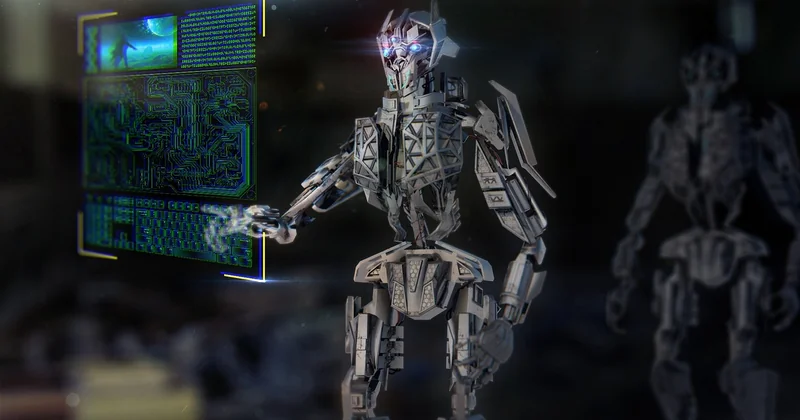
What's actually deployed
| Use case | Maturity | Where it hurts |
|---|---|---|
| Medical imaging triage | Widely deployed | Needs clean, standardized image data |
| Ambient clinical documentation | Growing fast | Accents, jargon, multi-speaker visits |
| Sepsis & deterioration alerts | Established in large systems | Alert fatigue if thresholds are sloppy |
| Drug discovery screening | Active in pharma R&D | Long validation timelines |
| Chatbot symptom triage | Experimental / consumer | Hallucination and liability |
| Autonomous diagnosis | Not there yet | Everything |
Notice the pattern. The tools that work are narrow and assistive. The tools that struggle try to do too much.
The documentation shift nobody talks about enough
If you want one example that captures how AI is changing healthcare today, watch the exam room. A clinician no longer types while you talk. The software listens, drafts, and she edits. That single change has altered the tone of thousands of appointments. Patients notice when their doctor makes eye contact.
Is it perfect? No. It mangles drug names. It occasionally invents a detail. Every clinician I've talked to keeps a hand on the wheel. But the direction is clear: AI is taking the clerical work and leaving the human work.
How does artificial intelligence impact the healthcare industry?
The industry-level impact isn't mainly about better outcomes yet. It's about cost, liability, and labor—the three things that make hospital administrators lose sleep.
On cost, the math is unglamorous. Administrative overhead eats an enormous share of healthcare spending in most wealthy countries. Anything that trims paperwork is a bigger financial story than a flashy diagnostic tool. That's why hospital CFOs are more excited about billing automation than about generative diagnosis.
On liability, we're in genuinely new territory. When a model misses a finding, who is responsible—the clinician who overrode it, the vendor who built it, or the hospital that bought it? Courts and regulators are still working this out. I'll be blunt: this uncertainty is slowing adoption more than any technical limitation. Nobody wants to be the test case.
On labor, the effect is a shift in what skills matter. Radiology and pathology don't disappear; they start to reward people who can supervise a model, spot its failures, and know when to ignore it. That's a different skill set than the one medical school trained for a generation ago, and curricula are only starting to catch up.
The parts people leave out
- Hallucinations — a model that invents a citation or a lab value is worse than useless in a clinical setting.
- Bias — models trained on data from one population often underperform on others, and the failure is silent.
- Privacy — patient data is the most sensitive category there is, and HIPAA and GDPR compliance in an AI pipeline is hard work, not a checkbox.
- Alert fatigue — a flag that fires too often gets ignored, and then it's worse than no flag at all.
- Accountability — the legal question is genuinely unresolved, and that matters more than most people admit.
What are the 10 benefits of artificial intelligence in healthcare?
Rather than trot out a tidy list, here are the benefits that actually hold up—with the caveat attached to each, because a benefit without its condition is just advertising.
- Faster triage. Urgent cases rise to the top of the queue instead of waiting for a human to get to them.
- Less clerical burden. Notes, coding, and prior authorizations stop eating the clinician's evening.
- Earlier warning. Deterioration and sepsis get flagged hours before they'd otherwise be caught.
- Consistency. The same finding is judged the same way on the first scan and the four-hundredth.
- Reach. A small clinic can access screening capability that used to require a specialist on site.
- Research acceleration—genuinely, in the lab, where screening millions of compounds is now feasible.
- Personalization at the margin. Dosing and risk scores tuned to the individual rather than the average.
- Reduced diagnostic delay in settings where the queue, not the disease, is the danger.
- Better use of scarce specialists. Their attention goes to cases that need a human, not to sorting.
- Compounding improvement. Every deployment generates data that can sharpen the next version—if, and only if, the governance is right.
Notice how many of these are about time and attention rather than raw intelligence. That's the honest shape of the field today.
The pros and cons, without the sales pitch
You'll find plenty of balanced lists online. Here's the version I'd actually defend.
The biggest pro is that AI is exceptionally good at the parts of medicine humans find tedious—reading, sorting, transcribing, screening. The biggest con is that it's exceptionally confident when it's wrong. A human who doesn't know something hesitates. A model often doesn't.
Which means the deployment question isn't "is the model accurate?" It's "what happens when it's wrong, and who catches it?" Every serious health system I've followed answers that question with a human in the loop. The ones that don't tend to make the news for the wrong reasons.
The access problem nobody solves by accident
Here's what bothers me most. The health systems best positioned to deploy clinical AI are the wealthy, well-instrumented ones. The clinics that would benefit most—rural hospitals, under-resourced systems, low-income countries—are the least able to afford the infrastructure, the data pipelines, or the people to run it.
So the default outcome, if nobody intervenes, is that AI widens the gap it could have closed. A flagship academic center gets a sepsis model that saves lives; a rural clinic two hours away gets nothing. That's not a technology failure. It's a distribution failure, and it's a choice.
I don't have a clean fix. I do think any honest article about AI in healthcare has to name it, because the tools are good enough now that the question of who gets them is no longer theoretical.
So where does this leave you?
If you're a clinician, the practical move is to get curious about the tools entering your workflow instead of waiting for someone to hand you a policy. Ask what the model was trained on. Ask what happens when it's wrong. Ask who's accountable.
If you're a patient, the honest reassurance is that the human is still in the loop almost everywhere that matters. The machine is reading alongside your doctor, not instead of her.
And if you're just trying to understand the landscape, hold onto this: AI in healthcare is not arriving as a revolution. It's arriving as a hundred small rearrangements—some of which give a doctor her evening back, and some of which quietly decide which scan gets read first. Which of those two stories turns out to dominate is not a technical question. It's the one we get to answer.